


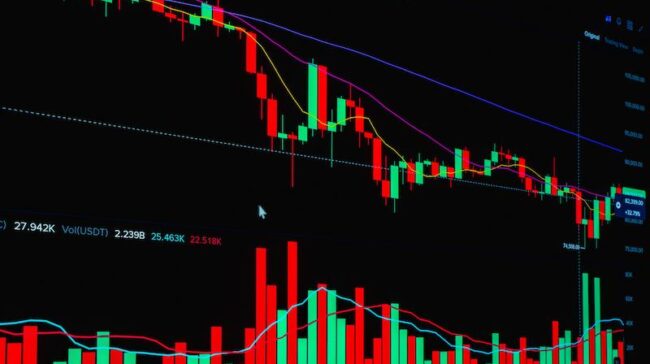
Volatility is not a flaw in financial markets; it is a feature. Prices rise and fall as new information arrives, and investors who accept this reality tend to behave better. Many Indians now start their day by checking Dow Jones Live movements to understand overnight global sentiment. Others watch the Hang Seng Index closely during Asian hours to sense regional risk appetite. Regardless of which indicators you follow, the goal should be a portfolio strong enough to withstand shocks without forcing you into panic decisions.
Start With Asset Allocation
Studies over several decades have shown that an investor can control the majority of a portfolio’s long-term behaviour through asset allocation. Deciding how much to hold in equities, debt, gold and cash is more important than which stocks to pick. A young investor with a steady income and long horizon might hold a significantly higher equity allocation in their portfolio. Someone nearing retirement should look to hold more in debt instruments, fixed deposits, and conservative hybrid funds.
A simple rule of thumb is to subtract ones age from 100 or 110 to arrive at a rough equity percentage. One’s personal risk tolerance, dependants, liabilities and goals should tweak this number. Review ones allocation at least once or twice a year and rebalance when necessary.
Diversify Across Sectors and Styles
Even while buying equities it is important to spread investments across sectors. Having too large a chunk in one area increases the risk that a specific corporate event will erode wealth. Spread investments across banking, information technology, healthcare, consumer goods, infrastructure and energy. Try and balance large-cap stocks with a few mid and small caps, keeping the higher risk ones in small proportions. Index funds and diversified equity mutual funds offer an easy way to do this. For those who prefer to hand-pick stocks, limiting any one holding to a rough percentage of the overall portfolio minimises the damage that a rogue corporate-specific event can do.
Use Time and Discipline as Allies
Systematic investment plans remain one of the best tools for ordinary investors. By investing a fixed amount each month, one ends up with more quantity when the markets are down, and less when they are up, thus averaging out the cost. It removes the guesswork out of when to get in or out of the market, a task that even fund managers routinely fail at.
Discipline also helps in staying the course. The biggest failing of investors is to stop systematic investment plans in the face of falling markets. Many restart them only when prices have recovered. Staying the course through such periods can differentiate between successful and failed investing.
Keep a Safety Net Outside the Market
Resilience is not just about investments; it is about keeping a safety net outside the market as well. Keep an emergency fund of at least six months’ expenses in a savings account or liquid fund. Make sure to have adequate health and term life insurance so that a sudden medical emergency or loss of income does not force one to dip into equity investments at the wrong time off.
Similarly, manage debts carefully. Pay off credit card dues and high-interest loans as they can rapidly erode wealth. Clearing them is often the highest-returning investment that one can make.
Monitor, but Do Not Obsess
Staying informed is good, but checking one’s portfolio multiple times a day can lead to disaster. Set a schedule to check ones portfolio, maybe once a month or quarter. Ask if the investment thesis still makes sense, if the fund managers are performing consistently and if ones goals have changed.
When the world’s markets are swinging wildly, remember that ones time horizon dictates how much to worry. If ones goals are multiple decades away, then short-term gyrations are less important than continuing to invest and rebalancing periodically. Write down a few lines about ones investment policy and refer to it during such periods. It should briefly cover investment goals, allocation and rules for rebalancing.
A resilient portfolio is all about preparation, not prediction. By combining careful allocation, diversification, systematic investing, adequate insurance and discipline, one can be prepared to weather any storm that the world’s markets can create. For Indian investors it is about turning volatility into an opportunity to buy high-quality assets patiently.